Your Team Doesn’t Have a Content Problem
I’ve watched a good rep lose momentum on a deal because of a folder.Not a bad pitch. Not a weak product. A folder.The prospect asked for the case study during the call, the one that almost perfectly matched their industry. The rep said, “Let me find it and send it over.”
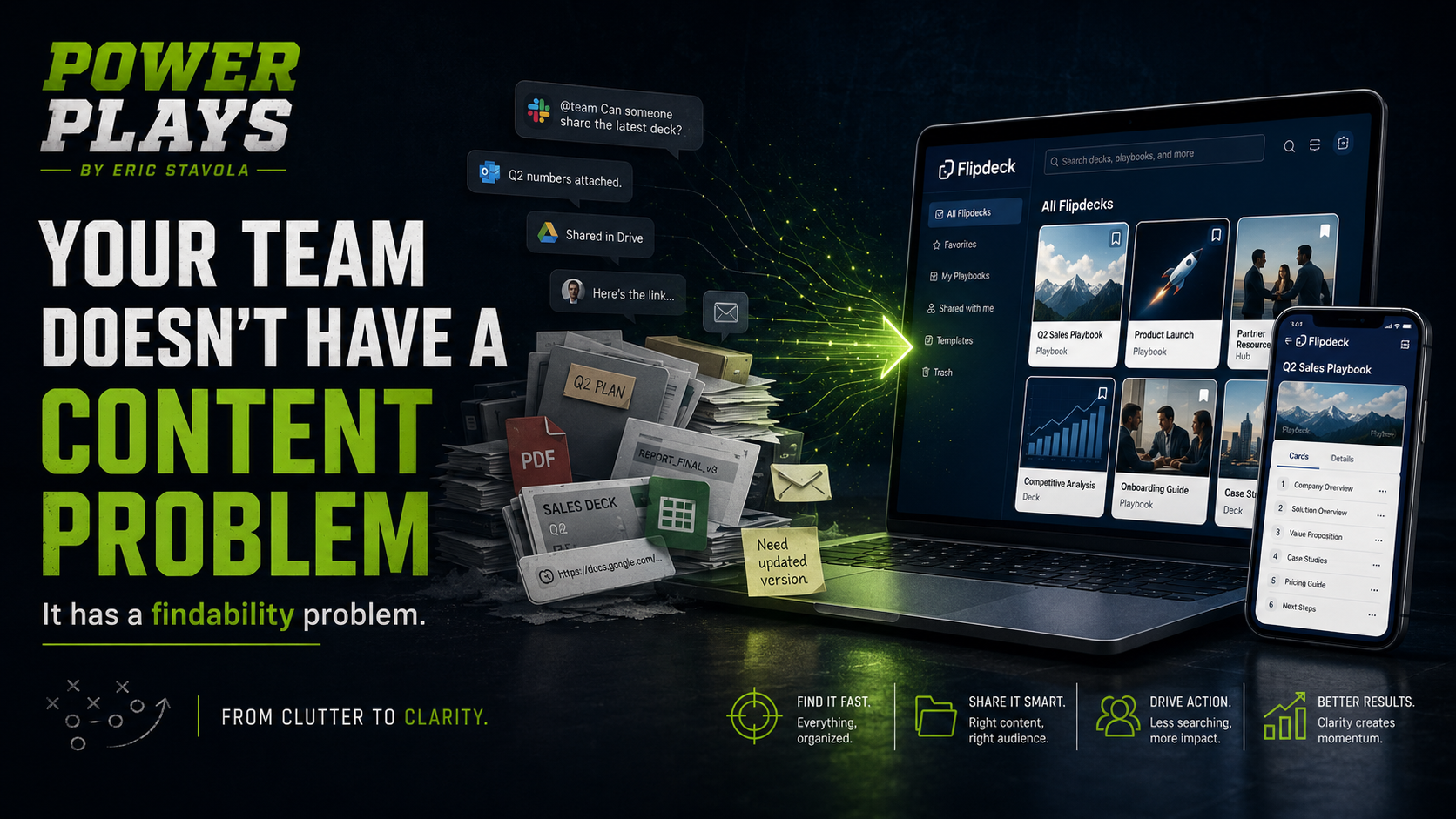
Then he spent two days digging through a shared drive, a few Slack threads, and an old email chain. By the time the right version reached the prospect, the energy from the call was gone. The deal didn’t die that day. It cooled. And cooled deals are the hardest ones to bring back.For years I assumed problems like that were content problems. We needed better case studies, cleaner decks, a sharper one-pager. So we built them. And the pile grew.Here’s what I’ve learned the hard way. Most teams don’t have a content shortage.
They have the opposite.The cabinet is full. Nobody can find anything in it.Walk into almost any company and you’ll find decks, one-pagers, recorded demos, pricing sheets, and battle cards. Three versions of each. None of them clearly marked as current. The material exists. It’s just buried, stale, or sitting in someone’s downloads folder where it helps no one.This is where most teams get stuck. They keep solving for creation when the real bottleneck is access. Making the material was the easy part.
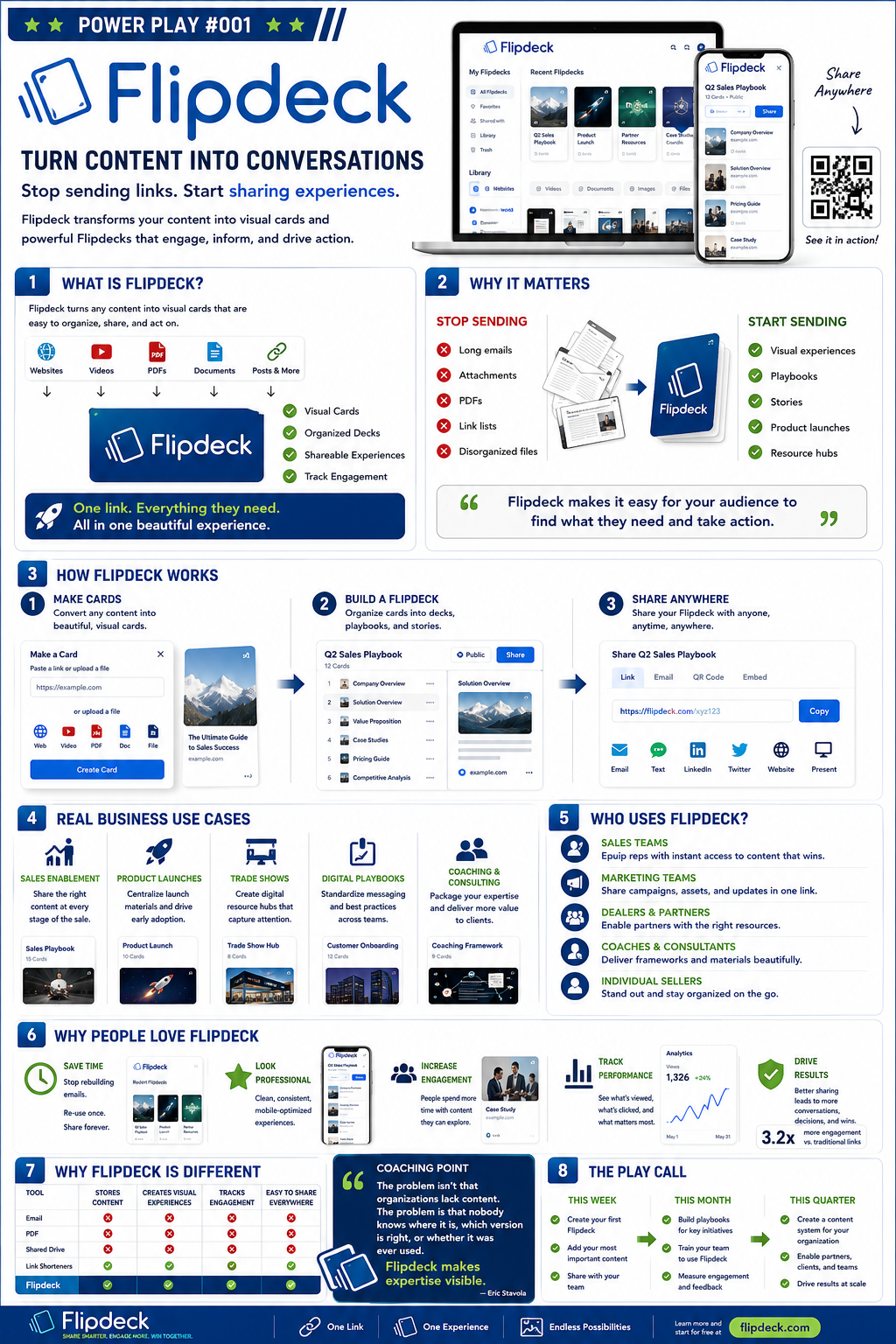
The hard part is making it findable, current, and usable at the exact moment someone needs it.You can have the best playbook in the league. If the quarterback can’t find the play at the line of scrimmage, it’s just paper.That’s the gap I keep seeing. Not a lack of knowledge. A lack of access to that knowledge at the speed the conversation actually moves.It’s why I’ve paid attention to what Flipdeck is built to do. The idea is simple, and it solves the right problem. Instead of sending a link or an attachment and hoping it’s the right one, you turn your content into visual cards and organize them into decks. One link carries everything the other person needs, arranged the way you’d walk them through it in person. They open it and find what matters. You can see what they actually looked at.That last part matters more than it sounds. When you can see what a prospect opened and what they ignored, you stop guessing about what moves a deal. You start building from evidence.
The rep I told you about is still on my mind. He didn’t need more content. He needed to put his hand on the right thing while it still mattered.Most of our people are in that same spot right now. Doing good work inside systems that make the simple part hard.
The teams that pull ahead won’t be the ones with the most material. They’ll be the ones who can find it, trust it, and put it to work before the moment passes.